Labour Turns Inward While Defence Plans and Energy Support Stay Unsigned
Starmer's team tracks internal challengers while defence reviews, energy bill aid and multiple structural reforms remain stalled.
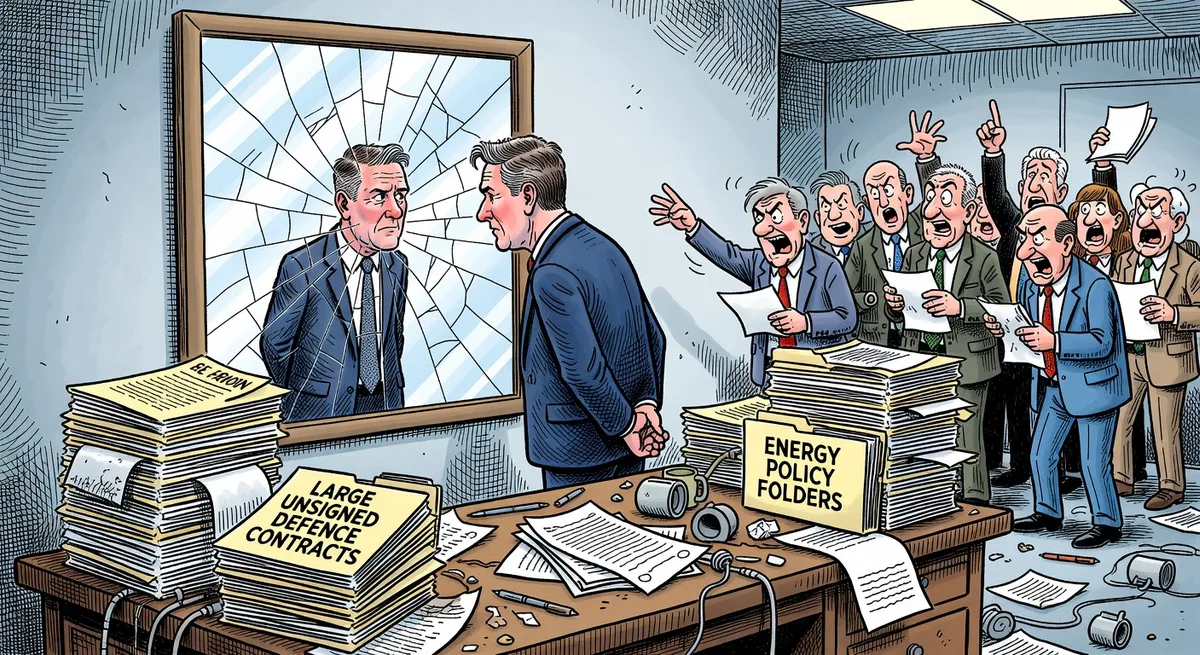
No 10 focuses on succession numbers as policy deadlines pass
Labour’s leadership contest has begun while a defence spending plan sits unsigned on the prime minister’s desk. Ministers report that No 10’s daily focus for months has centred on whether Wes Streeting holds enough support and whether Andy Burnham can secure a parliamentary seat. Major decisions on energy bill support, fuel duty, children’s online safety rules and NHS staffing remain unresolved.
Streeting has already left government to prepare his challenge. Burnham secured an MP prepared to stand aside for a by-election in Makerfield. Reform UK intends to contest that seat aggressively. Senior Labour figures now debate whether to force a full contest or reach an accommodation that installs Burnham without one.
Overdue Domestic Decisions
The domestic agenda shows concrete delays. A defence spending review has waited months for signature. Millions of households await confirmation of winter energy bill assistance ahead of expected price increases. A promised fuel duty review has produced no outcome. Consultations on social media restrictions for minors close without clear next steps.
Public sector pay disputes, AI regulation, youth employment programmes and special educational needs provision all require action in the coming months. Social care reform and welfare changes remain at the stage of stated intention rather than legislation.
Authority and Decision Patterns
Cabinet ministers acknowledge that Starmer’s capacity to secure support for difficult measures has narrowed. Colleagues describe repeated delays in reaching positions, with one ally noting the absence of clarity and conviction in core choices. The same pattern of slow resolution appeared under Theresa May and Boris Johnson, where teams reported constant requests for additional information rather than conclusions.
Starmer knows from his own opposition rhetoric that mid-term leadership changes disrupt Whitehall work. Current conditions make any controversial policy push harder to sustain.
Institutional Continuity
The immediate question is whether Starmer will stand aside before a formal contest or attempt to fight. Union leaders and large numbers of MPs have already stated he cannot lead Labour into the next election. World events continue regardless, including efforts with France and other nations to reopen the Strait of Hormuz and preparations for upcoming Nato and EU summits.
Britain’s recent governments have shown consistent difficulty translating stated priorities into delivered outcomes on borders, public finances and institutional capacity. The current episode fits the established sequence: internal party calculations consume attention while accumulated policy backlogs lengthen.
This episode confirms that leadership transitions now occur inside governments rather than between them. The practical result is extended periods in which formal authority exists but effective decision-making does not.
Commentary based on The race to replace Starmer is on - but he still faces a momentous choice at BBC News.
← Back to commentary