London Sewage Traces Polio Tenth Time as Eradication Funds Vanish
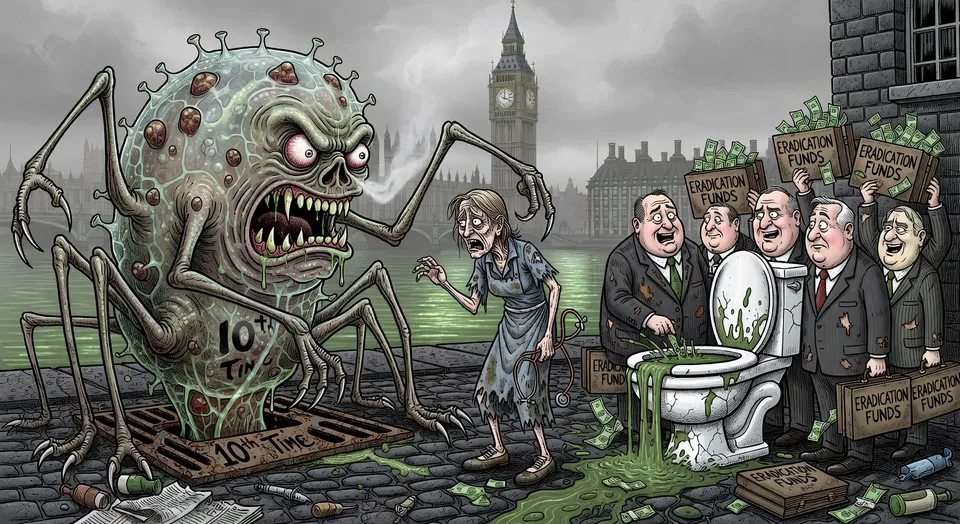
92% childhood vaccination rate meets £6bn aid cuts for defence
Polio virus detection in London sewage coincides with UK ministers slashing global eradication funding, exposing vaccination dips and policy risks that import disease amid eroding public health security.
Commentary Based On
the Guardian
Polio virus detected in London days before ministers cut global eradication funding
Polio virus circulates in London sewage for the tenth time since 2024, detected days before ministers axed UK funding for global eradication.
The sample came from Beckton treatment works on 2 March. UK Health Security Agency officials call it vaccine-derived type 2 poliovirus from importations. No local transmission shows yet, but low vaccination pockets heighten paralysis risks for under-fives.
Immunisation rates expose the vulnerability. Coverage for one-year-olds fell from 95% in 2012-2015 to 92% in 2022-23. This four-point drop signals eroding public health discipline over a decade.
Ministers timed the cut last week within £6 billion in aid reductions. Proceeds fund defence spending hikes. The UK drops from second-largest Global Polio Eradication Initiative donor after the US.
GPEI now faces a 30% budget shortfall for 2026. Surveillance and outbreak responses shrink first. Campaigners label the move shortsighted, as viruses ignore borders.
Professor Andrew Pollard of Oxford Vaccine Group flags ongoing transmission risks in low-vax London communities. He urges parents to check red books and book jabs. Paralysis strikes nerves in spine and brain; breathing muscles fail in worst cases.
Epidemiologist Kathleen O’Reilly notes rising European detections, including Germany. UKHSA alerts hospitals and GPs. Sewage positives do not mean paralysis cases, but vigilance rises.
Historical success relied on mass vaccination. Wild polio clings to Afghanistan and Pakistan. Vaccine-derived strains emerge where oral vaccines meet low uptake, mutating to virulence.
UK surveillance picks up handfuls yearly from routine wastewater checks. Two unrelated London detections this year alone. Officials downplay to low public risk while pushing catch-up shots.
Funding Priorities Shift Risks Homeward
The pivot trades global health security for domestic arms. UK aid once anchored eradication; now cuts amplify import threats. Polio’s 225 global cases in 2025 underscore the fragility.
Covid proved interdependence: weak links abroad weaken Britain. Defence gains do not vaccinate children. Ordinary families face heightened exposure from policy choices.
Cross-party neglect compounds this. Vaccination dips span Tory and Labour years. NHS strains and anti-vax sentiment mirror US worries, eroding herd immunity.
Institutions react, not prevent. Sewage monitoring detects; funding cuts precede. No minister faces scrutiny for the sequence.
Public health demands proactive investment. Functional governance sustains eradication funding alongside strong domestic uptake. Britain chooses neither fully.
This episode reveals institutional myopia. Polio’s return to London sewage traces policy failures that import disease while domestic defences weaken. UK decline accelerates as global ties turn liabilities, not strengths.
Commentary based on Polio virus detected in London days before ministers cut global eradication funding by Kat Lay on the Guardian.