Met Downgraded Risk on Known Offender Before Further Attacks
Police, prosecutors and courts released a convicted sex offender on bail repeatedly despite accumulating charges and prior prison time.
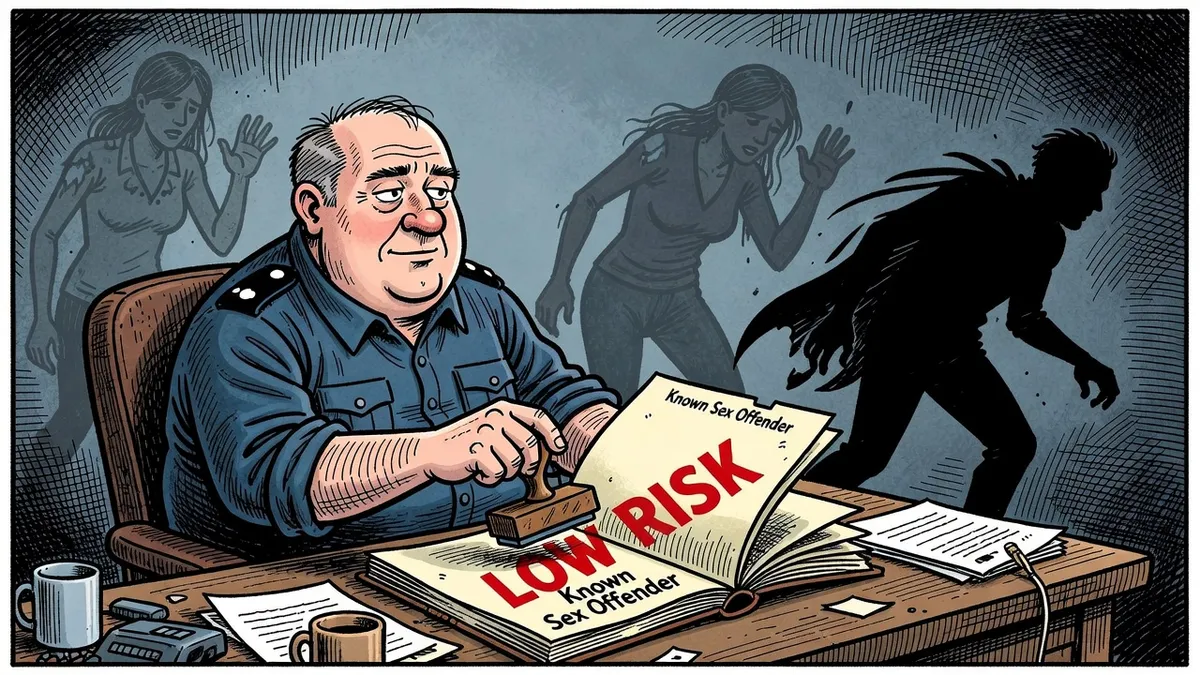
Bail releases and closed investigations left serial assaults unchecked across multiple forces
Simon Levy murdered two women and raped a third while under active monitoring by the Metropolitan Police and British Transport Police. The agencies had charged him with earlier sex offences, held him on bail multiple times, and returned his travelcard despite known violations. These decisions followed his prior prison term for sexual assaults and occurred after the Met claimed reforms in response to earlier high-profile failures.
Levy received a three-year sentence in 2021 for assaults involving penetration. The sentencing judge declined to impose a Sexual Harm Prevention Order. Police and prosecutors raised no objection. Upon his 2024 release the Met immediately reclassified him from high-risk to medium-risk, reducing oversight even as British Transport Police accumulated further assault charges against him.
The Met closed an investigation into a January 2025 rape that could have identified Levy as the perpetrator. It did not treat Carmenza Valencia-Trujillo’s March 2025 death as murder or assign homicide detectives until after Sheryl Wilkins was killed. British Transport Police took more than six months to charge Levy for filmed assaults on trains. Both forces returned his stolen travelcard, enabling continued offending.
Pattern of Delayed Action
The Crown Prosecution Service took years to act on Levy’s assault of a prison officer. Courts granted bail repeatedly despite breached conditions. These steps repeated across separate agencies with no single point of escalation that halted the sequence.
The Met had stated it reformed procedures after the Sarah Everard murder and the Stephen Port killings. Commissioner Sir Mark Rowley continues to reject the finding of institutional sexism. Levy’s case shows the same operational gaps persisting: risk assessments lowered without new evidence, investigations closed prematurely, and bail maintained despite accumulating offences.
Deputy Assistant Commissioner Kevin Southworth described the outcome as a collective system failure. Two British Transport Police officers were moved after delays attributed to incompetence. No senior officials face removal or structural sanction. The same agencies retain responsibility for managing future high-risk offenders.
This sequence demonstrates that formal monitoring regimes and post-incident reviews do not produce consistent restraint on known offenders. Public safety depends on the quality of daily decisions rather than stated policy intentions. The gap between claimed reform and recorded outcomes remains unclosed.
Commentary based on Police failings revealed as sex offender Simon Levy left free to murder and attack women at BBC News.
← Back to commentary