Mortgage Rates Rebound as Energy Imports Transmit Global Shocks
UK borrowing costs climbed back to mid-June levels after oil spiked above 100 dollars, exposing household exposure to imported energy volatility.
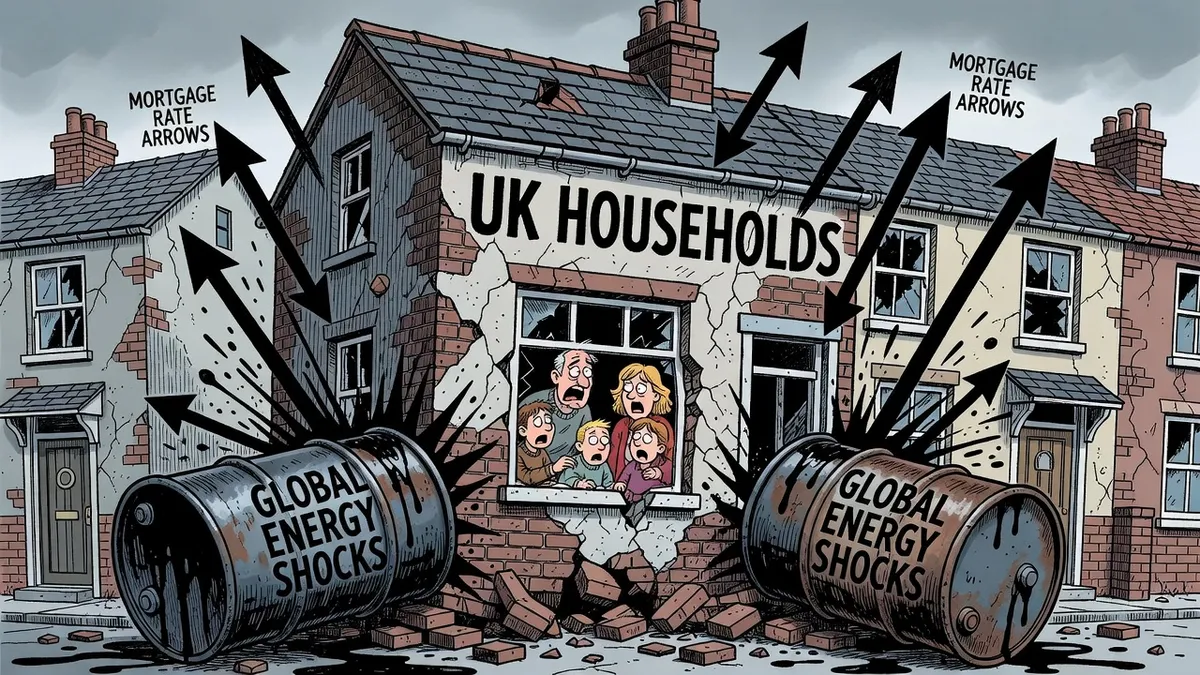
Fixed deals at 5.59 percent erase June gains for five million households facing resets by 2028
Mortgage rates have returned to levels last seen in mid-June, with the average two-year fixed deal now at 5.59 percent and five-year deals at 5.61 percent. Lenders raised pricing after fresh Middle East strikes and Red Sea attacks drove oil above 100 dollars a barrel and reduced expectations for Bank of England rate cuts.
More than five million homeowners face higher repayments by the end of 2028 under current projections. Most hold fixed deals that will reset at these elevated rates once their current terms expire. The brief period of falling quotes has ended without any structural change in domestic borrowing costs.
Britain imports the bulk of its energy needs. Global price spikes therefore transmit directly into inflation expectations and funding markets that set mortgage pricing. Successive governments have left this exposure unaddressed while household debt remains elevated relative to incomes.
The pattern shows repeated external shocks dictating outcomes for British borrowers. Each episode of geopolitical tension produces the same sequence: temporary rate relief vanishes, lenders withdraw products, and households absorb the increase without offsetting wage or productivity gains. No recent administration has altered the underlying energy dependence or housing cost structure.
Data from Moneyfacts records consistent daily rises across major lenders, including HSBC. Over 100 deals were pulled from the market in recent days as institutions recalibrated risk. Borrowers seeking to remortgage this year now confront a narrower set of options at higher cost.
This vulnerability compounds the stagnation in living standards. Real wages have not restored pre-2022 purchasing power for most households, yet shelter costs continue to absorb larger shares of income. The absence of domestic energy security or credible supply diversification leaves policy levers ineffective against these movements.
The result is a permanent drag on household finances that no single interest rate decision can reverse. External events dictate the trajectory while domestic institutions record the consequences without capacity to insulate citizens.
Commentary based on UK mortgage rates rise to highest level for more than a month at BBC News.
← Back to commentary