Mortgage Refinancing Wave Meets Fresh Rate Hikes
The Bank of England plans repeated rate rises that will raise mortgage costs while construction and manufacturing already contract.
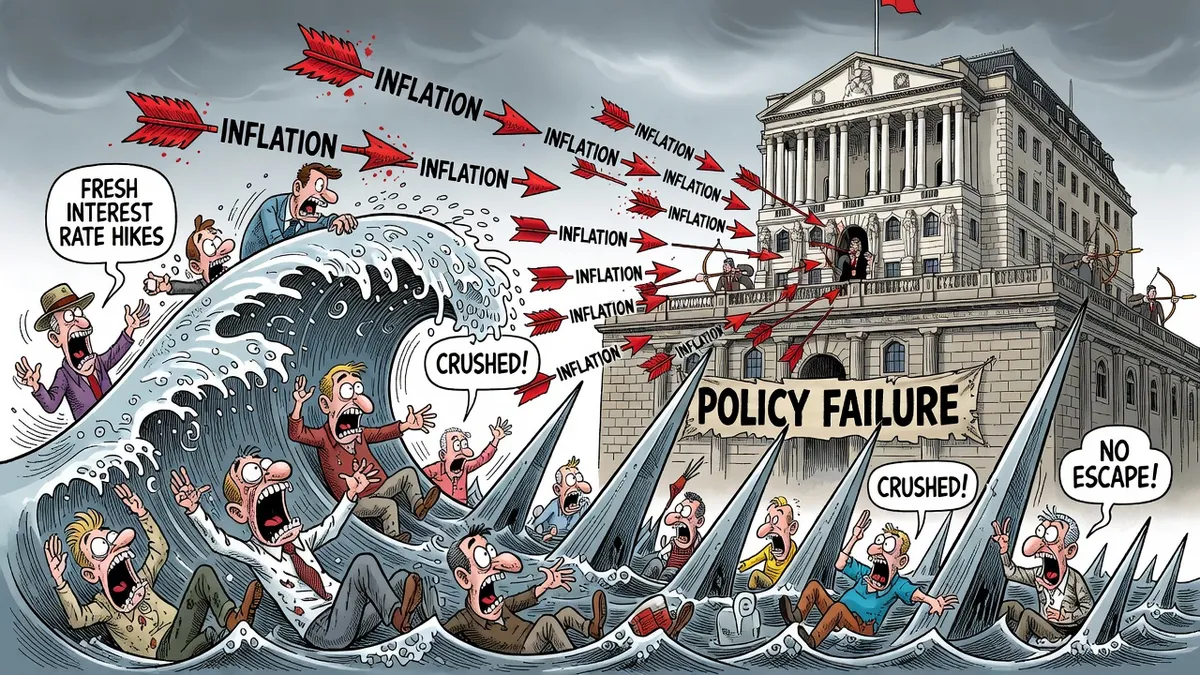
Bank signals further increases to 5 percent as 2.3 million loans reset amid 5 percent inflation forecast
The Bank of England has signalled further interest rate increases after lifting the base rate to 4 percent this month. Chief economist Huw Pill stated that evidence will motivate additional rises, with markets pricing in levels near 5 percent by 2027. This comes as 2.3 million homeowners prepare to refinance loans next year.
Inflation is projected to reach 5 percent in spring, driven by oil and gas price spikes linked to the Iran conflict. Policymakers expect workers to seek larger pay rises in response, which the Bank views as a risk requiring tighter monetary conditions. Pill noted the central bank waited too long previously and now sees limited scope for modest adjustments.
Sectoral Contrasts
Official data showed 0.7 percent GDP growth in the third quarter, placing Britain ahead of most G7 peers except the United States. Yet manufacturing faces direct pressure from higher borrowing costs, while construction has already contracted for much of the year. These divergences reveal uneven transmission of policy across the economy.
Household spending faces parallel constraints. The energy price cap is set to approach £2,000 for a typical home, with council tax bills rising nearly 5 percent on average. Rate increases compound these pressures at the point where many fixed-rate mortgages expire.
Policy Repetition
Rate cycles have become a recurring response to imported inflation and domestic wage dynamics. Each adjustment raises debt servicing costs for households and businesses without addressing structural constraints on productivity or energy supply. The same sequence has played out across multiple governments and external shocks.
Financial markets have incorporated these expectations, with analysts treating a December hike as probable. The Bank’s monetary policy committee will decide on 17 December, with further moves likely into 2027. This trajectory extends the period of elevated borrowing costs for an economy already carrying high levels of household and corporate debt.
The pattern shows institutions prioritising inflation targets through repeated tightening even as real incomes and investment capacity remain constrained. Ordinary borrowers absorb the direct costs while underlying vulnerabilities in energy security and output growth persist unchanged.
Commentary based on Interest rate rises likely in coming months, Bank of England’s chief economist says at the Guardian.
← Back to commentary