Payrolls Contract as Youth Employment Keeps Sliding
UK labour data show payrolls down 100,000 and youth joblessness at 14.7%, exposing persistent weakness beyond the Iran conflict shock.
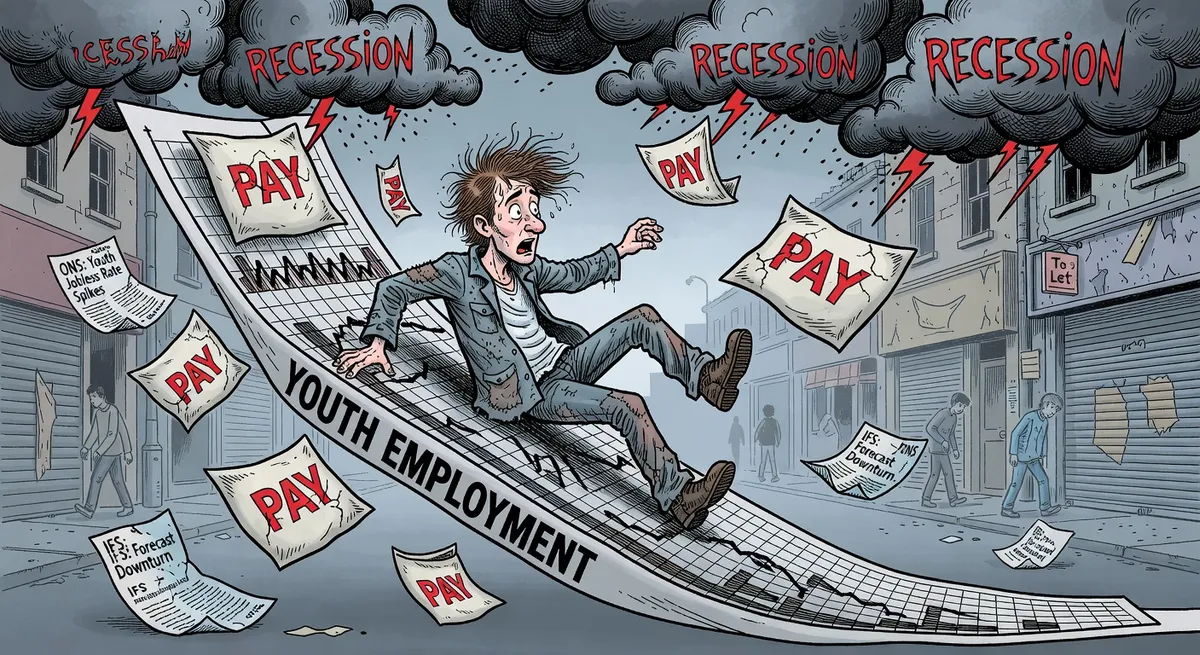
Unemployment edges to 5% while vacancies hit five-year low
Britain’s unemployment rate has climbed to 5 percent while payroll employment fell by 100,000 in a single month. Official figures record the first measurable effects of the Iran conflict on hiring, yet the data also show vacancies at their lowest level since 2021 and youth unemployment at 14.7 percent.
The Office for National Statistics attributes part of the slowdown to higher employment taxes and regulatory costs that began affecting firms at the start of the new tax year. Hospitality and retail recorded the sharpest drops in both vacancies and headcount. These sectors already operated with thin margins before additional labour costs were imposed.
Youth employment trends predate the current conflict. Institute for Fiscal Studies data show the share of 16- to 24-year-olds in payrolled work fell from 54.9 percent in December 2022 to 50.6 percent in December 2025. This decline matches the scale seen during the 2008 financial crisis and the Covid period.
Separate figures confirm the youth unemployment rate has reached its highest point since late 2014. Employers cite rising labour costs and regulatory uncertainty as reasons for pausing recruitment. Young workers face fewer entry-level openings at the same time that early-career joblessness produces documented long-term earnings losses.
The pattern of falling vacancies and shrinking payrolls extends beyond the immediate shock of Middle East hostilities. Businesses report sustained pressure from cumulative tax and compliance changes introduced across successive governments. Demand for workers continues to weaken as these costs compound.
Payroll reductions of this magnitude coincide with broader withdrawal from the labour market. Research from the Institute for Fiscal Studies and the King’s Trust highlights rising numbers of young people outside both work and education. Mental health factors and benefit structures receive mention, yet the underlying data show employment rates that have not recovered to pre-pandemic benchmarks.
These outcomes expose how UK labour-market policy responds to external events. Successive administrations have layered costs and rules without restoring the conditions that once supported steady hiring and youth participation. The result is a jobs market that contracts faster when any new pressure arrives.
Britain’s recorded unemployment rate now sits above the level that prevailed for most of the previous decade. Payroll employment is shrinking while vacancies reach multi-year lows. The combination points to structural weakness rather than a temporary adjustment.
Commentary based on UK unemployment rate unexpectedly rises to 5% at BBC News.
← Back to commentary