Prevent Unaware of Widdecombe Suspect as Probe Turns to Terrorism
Counter-terrorism units took over the Widdecombe murder case after new evidence emerged, exposing gaps in Prevent monitoring of threats to public figures.
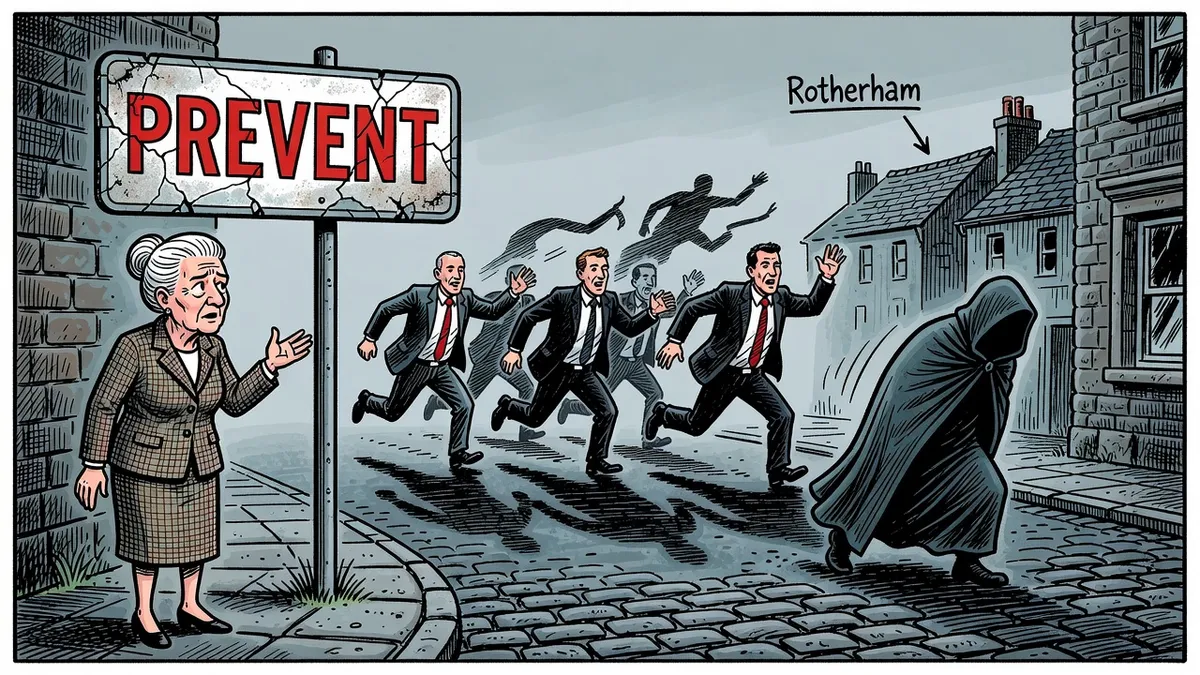
Rotherham man re-arrested after local force reversed initial motive assessment
Counter-terrorism police have assumed control of the Ann Widdecombe murder investigation after new evidence emerged, leading to the re-arrest of a 28-year-old Rotherham man on suspicion of terrorism offences.
The suspect was not known to the Prevent programme. Home Secretary Shabana Mahmood confirmed this detail in the Commons, noting that the man had no prior contact with the scheme designed to identify radicalisation risks.
Devon and Cornwall Police initially stated there was nothing to suggest political motivation. Within days, the same force handed the case to Counter Terrorism Policing South East after CCTV footage showed the suspect travelling 270 miles from Rotherham with an object visible in his pocket.
The shift reveals a reversal in official positioning. Assistant Chief Constable Matt Longman had guided the public away from terrorism angles, only for national units to take over once fresh information surfaced. Independent reviewer Jonathan Hall KC described the early statements as an attempt to steer the narrative that later required correction.
Widdecombe held ministerial office under John Major and later served as a Reform UK spokeswoman. Her death follows the 2021 murder of Sir David Amess, after which a review into MP security was commissioned but has not prevented further incidents involving public figures.
The suspect’s profile fits no pre-existing Prevent record. This absence leaves open the question of how individuals outside monitored networks can still reach high-profile targets across significant distances without earlier detection.
Police have cordoned properties in Rotherham and maintained heightened presence near the Devon scene. Public appeals generated over 120 reports, yet the initial local assessment underestimated the case’s scope.
Security Gaps for Public Figures
Ravec, the body responsible for VIP protection, now faces pressure to expand coverage. Farage has accepted a meeting to discuss arrangements for Reform politicians who lack parliamentary status.
The pattern shows repeated reliance on post-incident reviews rather than proactive capacity. Amess’s killing prompted one inquiry; Widdecombe’s death triggers another without evidence that prior recommendations altered operational reach.
This case demonstrates that institutional systems for tracking potential threats to political actors remain reactive and incomplete. Ordinary citizens receive no equivalent assessment mechanisms when similar risks materialise outside elite circles.
Commentary based on Ann Widdecombe suspect not known to Prevent as counter-terrorism police take over investigation at BBC News.
← Back to commentary