Ramsgate Youth Services Yield Savings, Yet Council Auctions the Site
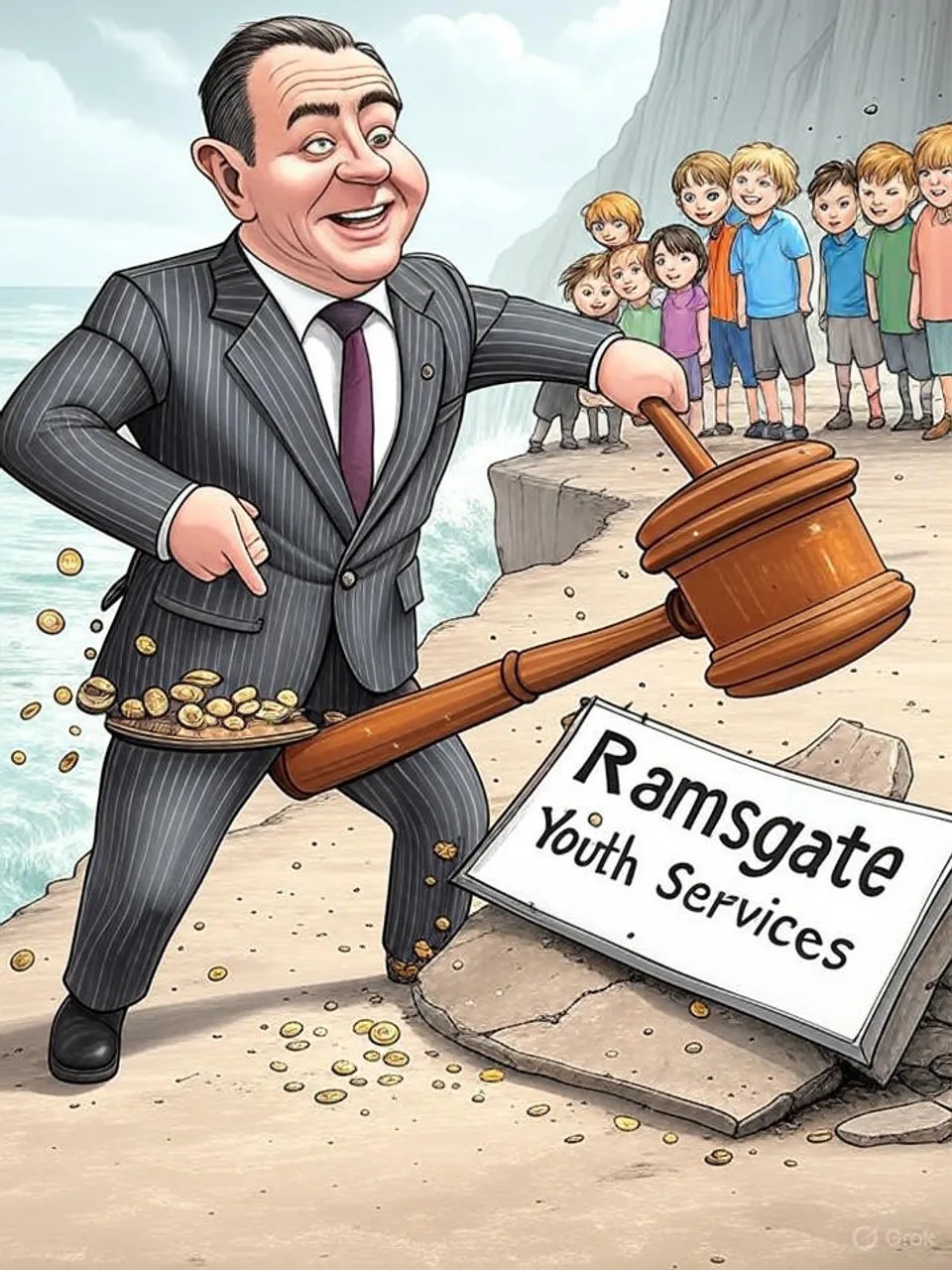
Independent report shows £580,660 annual savings ignored in Thanet closure
Kent County Council plans to sell Ramsgate's last youth centre despite evidence it saves £580,660 yearly in public costs. This decision exemplifies a decade-long funding collapse in youth services, deepening deprivation in coastal England.
Commentary Based On
The Guardian
Last youth centre in one of England’s most deprived coastal areas faces closure
Kent County Council plans to auction the last dedicated youth centre in Ramsgate, a building that houses services saving the authority over half a million pounds annually. An independent report from Outskirts Research quantifies these gains at £580,660 last year, through reduced demands on mental health, youth justice, and social care. The decision proceeds despite this evidence, as the council prioritizes budget balancing over proven returns.
Pie Factory Music has operated from the council-owned site for 13 years, serving nearly 1,000 young people aged eight to 25 in Thanet, one of England’s most deprived districts. The centre provides counselling, employment advice, life skills training, and support for young refugees, alongside creative music projects. Users like 16-year-old Tom describe it as their safest space in Ramsgate, where friendships form and risks subside.
Council cuts in 2024 halved Pie’s commissioned budget, forcing reliance on fundraising from trusts to maintain operations. Proposals to rent or buy the building received backing from local Reform UK councillor Terry Mole but faced rejection. The council’s alternative—a commercial lease at market rates—exceeds Pie’s finances, effectively barring continuation.
This closure follows the repurposing of Margate’s nearby youth centre, leaving Thanet without dedicated facilities. Broader data from the YMCA shows a 73% drop in English youth services funding since 2010, with a 6% annual decline in Wales over the same period. Such reductions compound vulnerabilities in coastal areas, where Essex University’s research identifies three times higher rates of undiagnosed mental health conditions among deprived youth compared to inland equivalents.
UCL’s Coastal Youth Life Chances project documents how seaside towns limit education, employment, and leisure options, stunting opportunities for residents. In Ramsgate, the Pie centre counters these barriers by fostering skills and connections that prevent escalation into costlier interventions. Auctioning the site ignores this preventive role, trading short-term asset sales for long-term fiscal burdens.
Kent’s leadership shifted to Reform UK in May, but the pattern of youth service erosion predates this change. Successive governments since 2010 have overseen the funding collapse, with no administration reversing the trend despite evidence of social costs. Local authorities, squeezed by central grants that fell 40% in real terms over the decade, pass the strain to frontline provisions.
The irony sharpens when viewing the £1.2 million taxpayer return estimated from Pie’s work. Closing the centre discards an investment that offsets youth offending and health crises, areas where public spending already balloons. Councils like Kent cite legal obligations to balance books, yet this rationale evades scrutiny of how asset disposals undermine the very services they must protect.
Thanet’s deprivation metrics—high unemployment, low social mobility—amplify the stakes. Young people here face isolation that inland peers avoid, with coastal studies showing persistent gaps in life chances. Without spaces like Pie, reliance on reactive services grows, pulling more families into cycles of need that strain national resources.
This episode exposes a core dysfunction in UK local governance: decisions favor immediate revenue over sustained savings. Elected officials across parties inherit fiscal pressures but perpetuate cuts to youth support, even when data proves otherwise. The result leaves deprived communities, especially coastal ones, with fewer anchors against decline.
Ramsgate’s youth centre sale crystallizes Britain’s institutional neglect of its most vulnerable generations. Across governments, youth services erode without accountability, widening social fractures in forgotten districts. Ordinary citizens bear the fallout as preventable problems multiply, revealing a system that values balance sheets over human potential.
Commentary based on Last youth centre in one of England’s most deprived coastal areas faces closure by Lisa Bachelor on The Guardian.