Rejections Without Removal: Home Office Data on Article 8 Claims
New limits on family-based human rights claims produce more paper refusals but leave over half of applicants inside the UK.
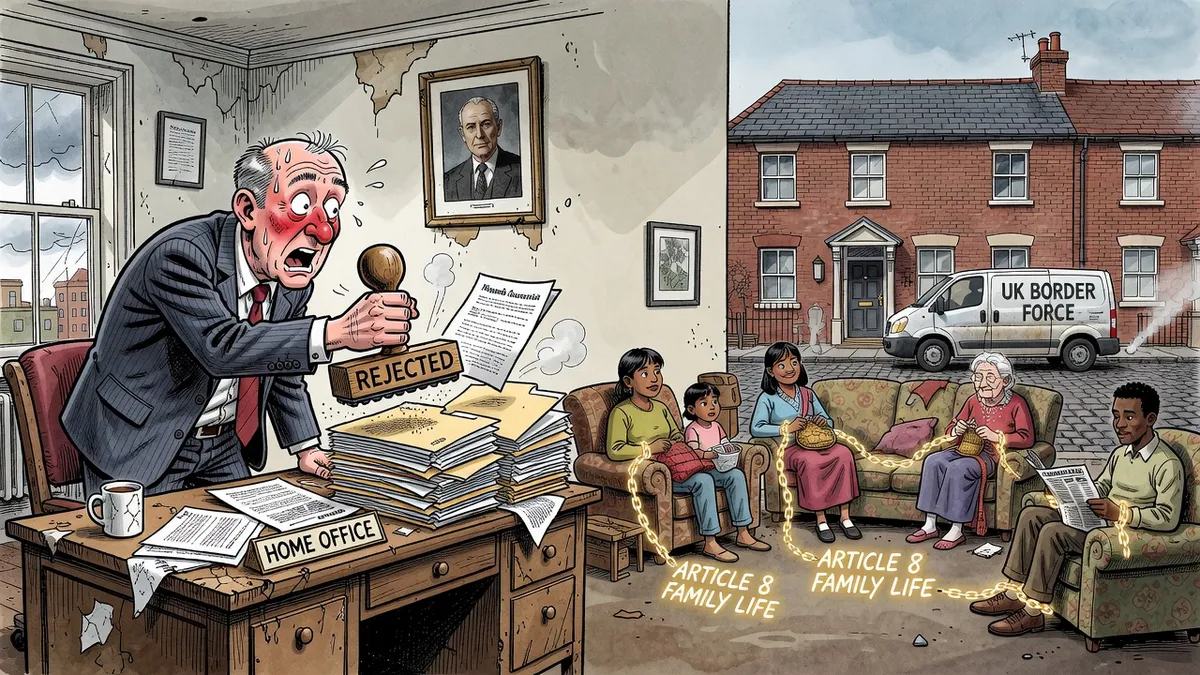
55% projected to stay despite 11,700 additional refusals
Rejections under new limits on article 8 claims will still leave most applicants inside the country. Home Office data projects 11,700 additional refusals from the tightened rules, yet 55 percent of those cases are expected to result in continued residence.
The immigration and asylum bill sets a narrower definition of family ties under article 8, restricting claims to spouses, parents and children. It bars use of relationships formed during unlawful presence and adds time limits plus one-claim restrictions on modern slavery assertions. These measures follow 34,000 article 8 grants last year.
An internal assessment places the lifetime fiscal cost of each such grant at £141,000 after tax. The same assessment records no corresponding mechanism to achieve physical removal for the majority of refusals.
Enforcement Gap
Past tightening rounds produced similar forecasts. Refusal numbers rose on paper while actual departures remained low because legal challenges, repeated claims and lack of detention capacity kept individuals in place. The current bill adds a £10,000 fee for settled status and removes judges from the appeals route, yet leaves the same underlying constraints untouched.
Frontline data already shows repeated claims and delayed initial decisions as primary drivers of backlogs. The legislation does not address decision quality or expand removal capacity at scale.
Fiscal and Capacity Outcomes
Each retained individual adds sustained housing, welfare and service costs. Recent use of former military barracks after hotel closures indicates continued pressure on accommodation stock. Payroll and public service data elsewhere show no offsetting productivity gains from these inflows.
The pattern holds across successive governments. Legislative language tightens definitions while operational delivery of removals stays flat or declines. Voters register repeated policy announcements; measured net migration and asylum-related populations continue their established trajectory.
This bill will generate more recorded refusals without altering the proportion who remain. The institutional result is sustained fiscal exposure and unchanged border outcomes.
Commentary based on More than half of asylum seekers rejected under tightened laws will remain in UK by Rajeev Syal on the Guardian.
← Back to commentary