Resettlement Scheme Restarts at Hundreds While Crossings Hold Steady
Limited legal pathways reopen with negligible volume against ongoing small boat arrivals and security vetting concerns.
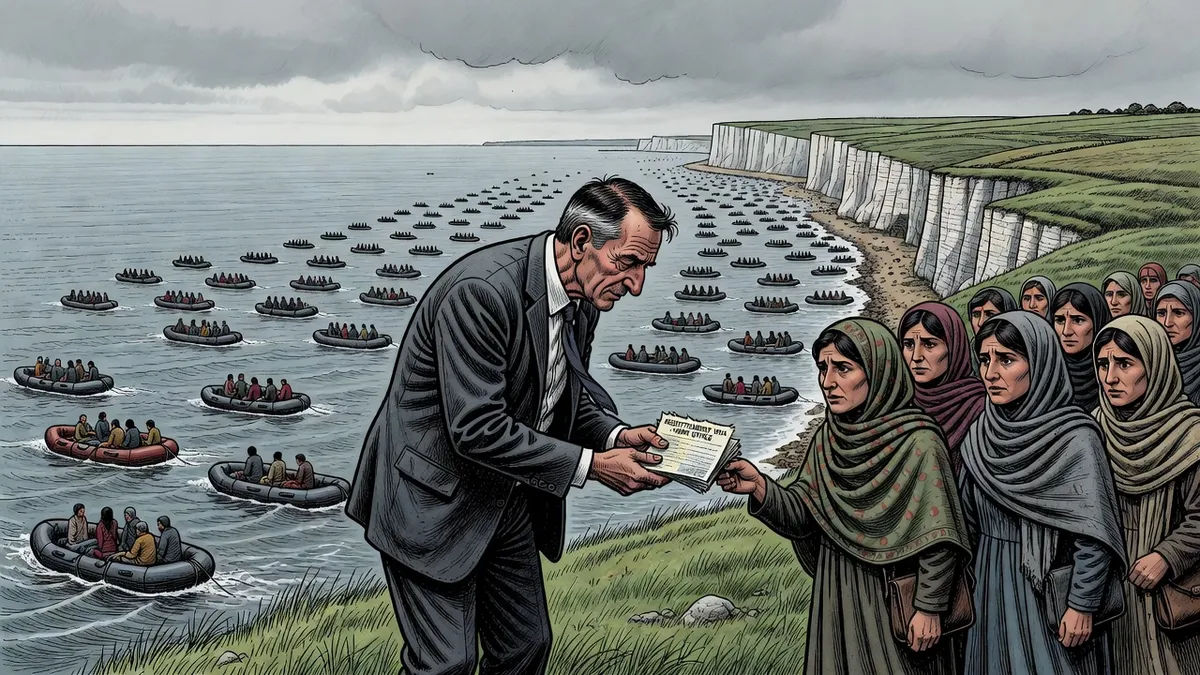
New routes target Afghan women and Palestinians under tight annual caps
The Home Office plans to reopen a suspended resettlement scheme that will admit hundreds of Afghan women, girls and Palestinians initially, scaling to low thousands annually under yearly caps. Official statements present this as restoring fairness and unlocking public generosity, yet the numbers remain negligible against daily small boat totals that reached 781 in a single day earlier this year.
The policy sets a five-year path to indefinite leave to remain for those selected through UNHCR and partner referrals. Irregular arrivals face status reviews every 30 months for up to twenty years. This two-track structure aims to reward legal routes while deterring others, but the scale difference leaves the deterrent effect minimal.
Limited Reach and Persistent Crossings
Migration Observatory analysis states the reopened route will not meaningfully reduce unauthorised arrivals. Previous resettlement schemes produced similarly small intakes before suspension in December 2024. Experts note that prioritising the most vulnerable groups correlates with higher long-term welfare costs and weaker labour market outcomes.
Government sources expect roughly one quarter of scheme places to go to the named categories, though absolute figures start in the low hundreds. Community sponsorship and work routes open later, with sponsors required to provide housing and integration support. These additions still operate under tight annual limits.
Security and Dependency Concerns
Background checks are promised for all entrants. Recent cases, including the grant of asylum to a former Hamas bodyguard later arrested on terror suspicions, illustrate gaps in prior vetting. Right-leaning critics highlight that women, girls and disabled refugees show elevated welfare dependency rates in historical data.
The scheme formally excludes extended family reunification following earlier restrictions. Even so, the Home Office projects these legal routes will coexist with continued harsh conditions on irregular entrants without altering overall inflow volumes.
Pattern of Constrained Capacity
Britain now maintains multiple parallel asylum mechanisms while small boat crossings adapt and persist. Each new legal pathway receives announcement emphasis on control and compassion, yet cumulative intake stays capped far below demand signals from source regions. The result is sustained pressure on housing, services and enforcement resources without resolution of the underlying volume mismatch.
This approach repeats across successive administrations: incremental schemes layered onto unchanged operational realities. Border statistics continue to record high daily arrivals even as policy documents stress restored control.
The resettlement expansion documents a system that advertises managed generosity while the dominant entry method remains irregular and largely unaddressed at scale.
Commentary based on UK to open new refugee resettlement routes for Afghan women and Palestinians by Jessica Elgot on the Guardian.
← Back to commentary