Seven Prime Ministers in Ten Years Expose Britain's Governance Fracture
Frequent leadership changes have produced no reversal in living standards, service capacity or regional cohesion across successive governments.
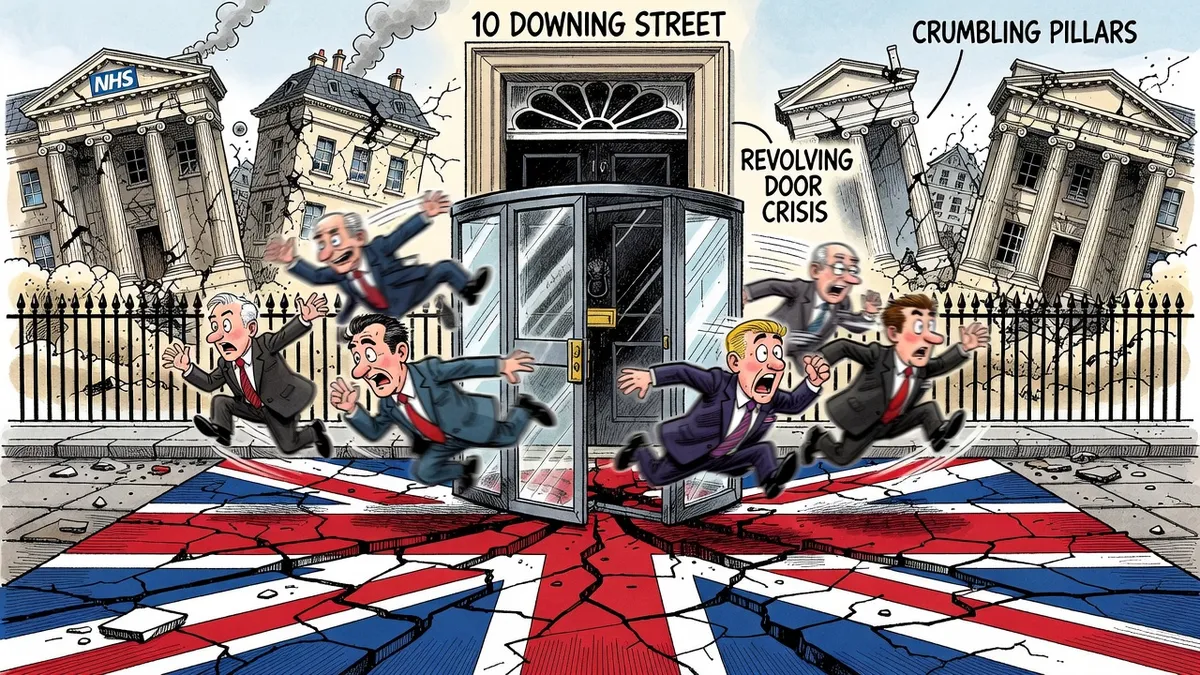
Burnham inherits the same structural constraints that defeated his six predecessors since the referendum
Seven prime ministers have held office since the 2016 referendum, a record of turnover that matches no other period in modern British history. Each arrival promised stability. Each departure left the same underlying fractures untouched.
The source article frames these problems as a mix of Brexit fallout and unresolved English identity. Data shows the pattern predates 2016. Public service performance metrics, living standards for lower deciles, and net migration volumes all deteriorated across multiple administrations of both main parties. The referendum did not create the stagnation. It accelerated an existing loss of governing capacity.
Repeated Leadership Rotation
Frequent changes at the top have produced no measurable reversal in key indicators. GDP per capita growth remains below peer European economies. NHS waiting lists stand at record levels. Regional productivity gaps between London and northern England have widened since 2010. Successive prime ministers inherited these conditions and passed them on with marginal adjustments at best.
Burnham’s proposed local devolution offers one variation on the theme of shifting power away from Westminster. Past experiments with combined authorities and metro mayors delivered uneven results. Some infrastructure projects advanced faster. Core fiscal and regulatory powers stayed centralised. The structural asymmetry of the UK state, with England lacking its own parliament, continues to channel discontent into national rather than regional contests.
Fragmented Electorate and Policy Limits
Voter support has split across seven parties operating under different electoral systems in different parts of the union. Reform UK draws from the same reservoir of economic pessimism and cultural grievance that earlier insurgent movements tapped. Re-nationalisation of water utilities may deliver short-term political credit. It does not alter the underlying constraints of debt levels, energy costs, or demographic pressures on public finances.
National narratives require credible grounding in outcomes. Claims of restored sovereignty or renewed fairness have repeatedly collided with measurable declines in real wages for lower-income households and persistent shortfalls in housing supply and transport capacity. The gap between rhetoric and delivery feeds the cynicism the article identifies.
Systemic Continuity
Britain’s governing arrangements concentrate formal authority while dispersing practical responsibility across devolved bodies, regulators, and private contractors. This structure rewards short-term announcements over sustained delivery. It also insulates decision-makers from direct accountability when targets are missed. The seventh prime minister in a decade now faces the same set of constraints that defeated the previous six.
The record shows institutional adaptation has not kept pace with accumulated pressures. Further rotation at the top will not change that arithmetic.
Commentary based on Burnham’s Britain: what kind of country has the UK’s new prime minister inherited? by Ben Wellings on The Conversation.
← Back to commentary