Southern England's Reservoirs Dwindle Amid Prolonged Drought and Regulatory Inaction
Reservoirs in southern England operate at 16-19% capacity after the driest April-September in over a century, with severe drought in six regions but no approved business water bans.
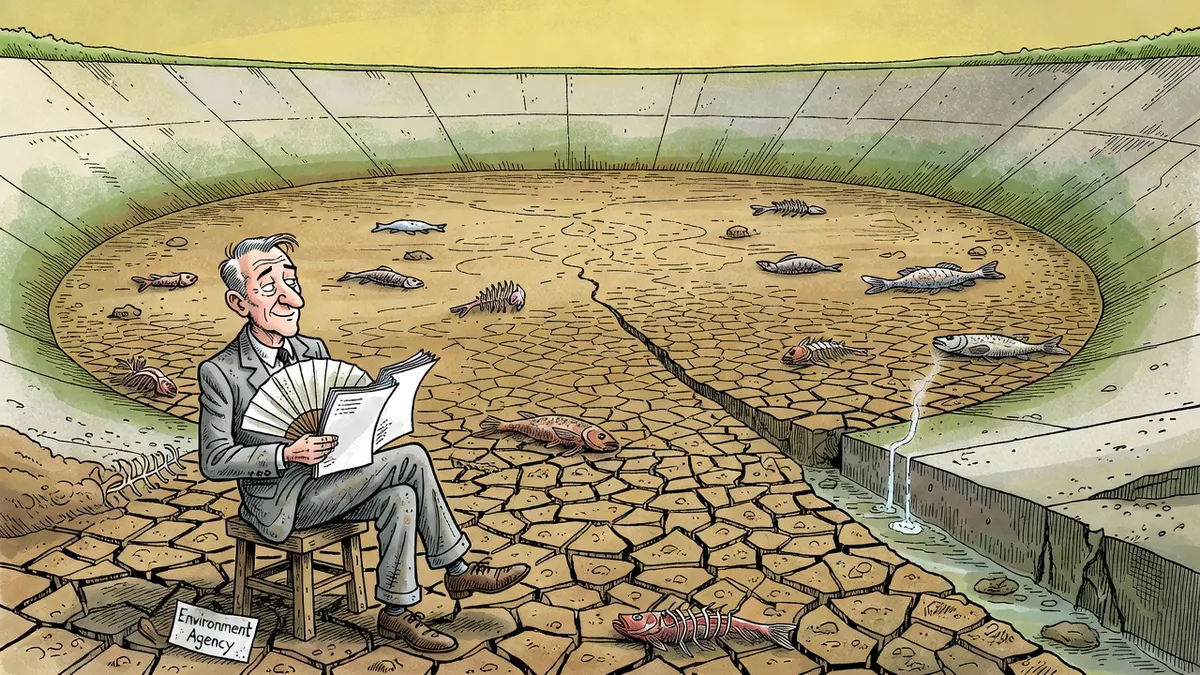
Reservoirs in southern England sit at fractions of normal capacity while requests for business restrictions remain unapproved. Ardingly reservoir operates at 19 percent full against an expected 75 percent. Wimbleball reservoir stands at 16 percent. These levels follow the driest April-to-September period in more than a century across the south-east and south-west.
Reservoir Data and Immediate Pressure
Six regions now carry severe drought status. Devon, Cornwall, Dorset, Somerset, East Sussex and West Sussex face threats to public supplies. Smaller reservoirs serving 56,000 households in Cornwall and 47,000 in Devon also show critical shortfalls. Daily monitoring by the Environment Agency has replaced routine oversight.
Water companies requested extended bans on non-essential commercial use. South East Water, South West Water and Southern Water sought limits affecting golf clubs, private schools and car washes. The environment secretary has not granted those approvals despite the declarations.
Policy Response and Institutional Lag
The water minister directed the Environment Agency to prioritise supplies where trade-offs arise. Yet no new statutory restrictions have followed. Officials continue to issue voluntary appeals for reduced household use. This approach repeats patterns seen in prior dry periods where early intervention was postponed.
Infrastructure planning has not matched recorded demand growth or climate variability. Reservoir storage targets assume average conditions that no longer hold. The gap between declared drought status and enforceable measures leaves supply security dependent on weather rather than engineered reserves.
Supply Security Implications
Business abstractions face heightened compliance checks but retain existing licences. Sewage dilution risks rise as river flows drop, increasing pollution potential during lower treatment capacity. Farmers and wildlife protections depend on the same voluntary reductions applied to households.
The pattern shows repeated reliance on reactive declarations rather than maintained headroom in storage. Water companies operate under drought plans that assume government support for restrictions when thresholds are crossed. That support has not materialised in the current episode.
England maintains no strategic reserve capacity sufficient for multi-year shortfalls. Policy continues to treat each drought as an isolated event rather than a recurring stress on fixed infrastructure. Households absorb the costs through usage limits while commercial abstractions proceed under unchanged rules.
This episode confirms water management operates without binding triggers that convert declarations into immediate supply protection. The result is sustained exposure of public supplies to seasonal extremes without corresponding infrastructure or regulatory response.
Commentary based on Severe drought declared in six areas of England as reservoirs run low at the Guardian.
← Back to commentary