Control Centre Ballot Closes Piccadilly Line
A TSSA ballot of fewer than two dozen members has halted the Piccadilly line and restricted District services over one dismissal.
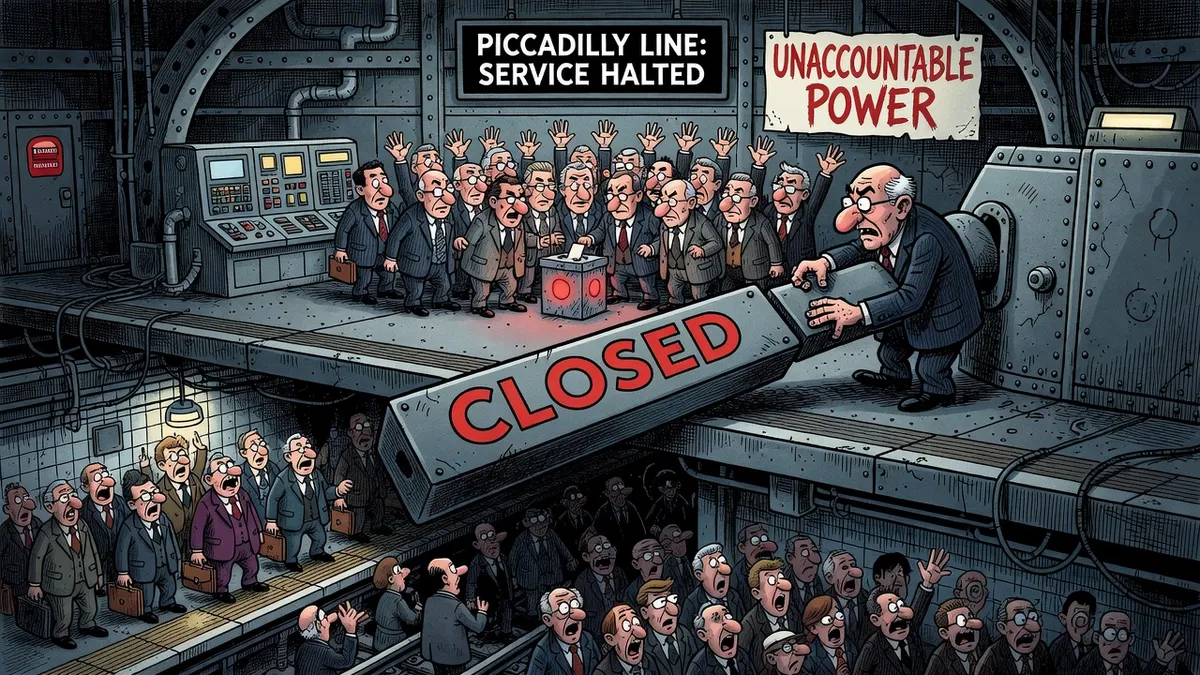
Under 24 votes trigger 24-hour shutdown affecting tens of thousands
Fewer than two dozen TSSA members voted to shut the Piccadilly line for more than 24 hours and restrict District line services. The ballot covered staff in a single control centre whose absence halts train movements across those routes. Tens of thousands of daily passengers now face cancelled journeys and altered schedules.
The dispute centres on the dismissal of one employee. TfL found the individual worked a second job while claiming full sick pay and classified the conduct as gross misconduct. The union disputes the fairness of the investigation and claims procedural flaws involving confidential data. Members voted unanimously with 83 percent turnout, meeting the legal threshold for action.
This concentration of leverage stems from the operational role of the staff involved. A small number of control centre workers can stop services that hundreds of drivers and station staff cannot. The same structure allows repeated short-notice ballots to produce outsized effects on the network.
London Underground has recorded multiple strikes this year from separate unions. The current TSSA action runs separately from eight planned RMT walkouts scheduled through Christmas and into January. Each dispute follows its own internal process with limited external constraint on timing or scope.
Public statements from opposition figures highlight the mismatch between voter numbers and passenger impact. No mechanism exists to require wider workforce consultation or to limit the reach of such ballots when core infrastructure is involved. Past governments have left employment and union rules largely unchanged despite repeated disruptions.
The pattern leaves daily commuters and businesses absorbing repeated costs without corresponding influence over the decisions that generate those costs. Infrastructure essential to the capital continues to operate under rules that place narrow sectional ballots ahead of network continuity.
Commentary based on Tube strike: How vote by less than 24 union members is set to paralyse two London Underground lines by Nicholas Cecil on The Standard.
← Back to commentary