Railway Assaults Reach Record Levels as Enforcement Capacity Shrinks
Reported violence on Britain's railways hit new highs while official responses defer meaningful increases in presence until 2028.
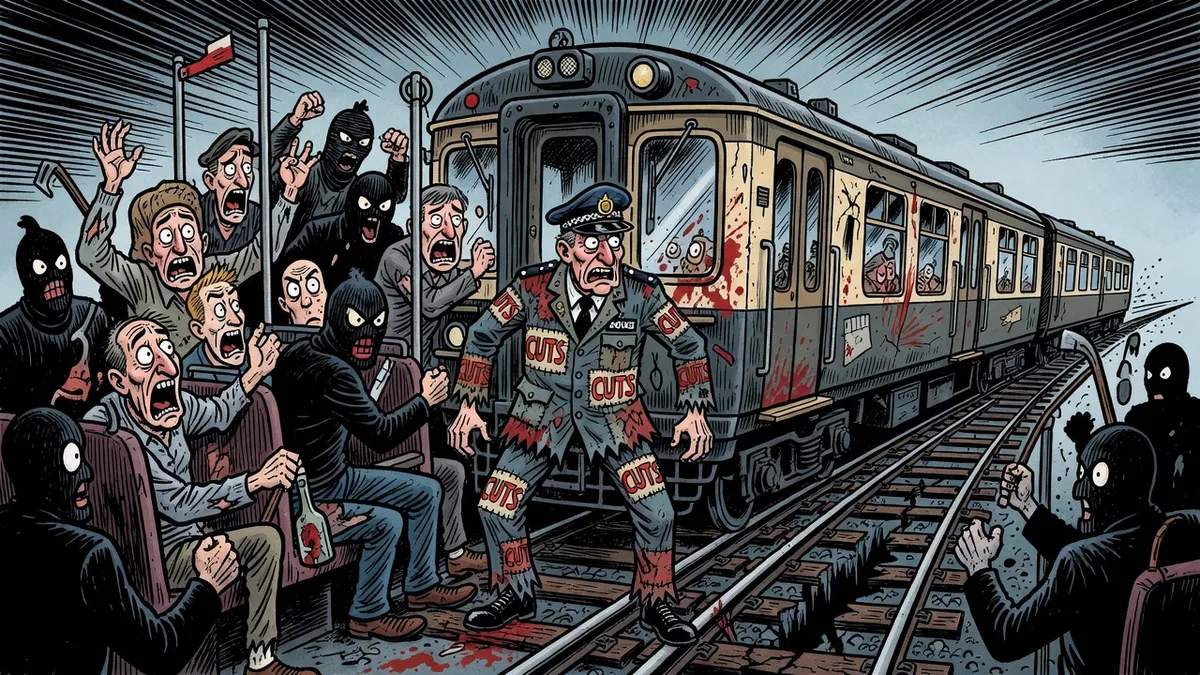
Nearly 25,000 incidents logged in 2025-26 amid ongoing police funding constraints
Railway assaults reached a record 24,753 reported incidents in 2025-26. This marked a 20 percent rise from the previous year, with attacks on passengers up 36 percent to 13,464 and incidents against staff reaching 11,289.
The Office of Rail and Road data shows harassment cases jumped 52 percent and common assaults against the public rose 30 percent. Physical assaults on workers averaged seven per day. These counts include multiple offences per event and now capture verbal abuse even without injury.
Funding and Staffing Shortfalls
British Transport Police numbers have faced sustained pressure. Union leaders from the RMT and TSSA linked the figures directly to reduced policing presence and lone working practices. Two-thirds of RMT members reported experiencing violence at work in the past year.
The government response points to a planned £63 million funding increase by 2028-29, intended to recruit over 200 additional officers. Current figures reflect both genuine rises in incidents and higher reporting rates encouraged by campaigns and new text-to-report systems. New railway behaviour notices introduced in June 2026 allow exclusion of repeat offenders, yet the trend has continued upward since the pandemic.
Pattern Across Public Services
Similar escalations appear in retail and the NHS, where violence reports against staff exceeded 100,000 in 2025. Each sector cites stretched resources, reduced on-site authority figures, and weaker deterrence. The railway case follows the same sequence: recorded incidents rise, unions document daily risks, and official responses emphasise future spending and awareness measures rather than immediate capacity restoration.
Accountability remains diffuse. Network Rail and operators cite improved CCTV and intelligence sharing, yet the chief inspector of railways noted the need for better employer controls without addressing why prior guidance failed to curb the growth. No single agency faces direct consequences for the sustained increase.
This trajectory reveals a transport system operating with thinner enforcement margins while passenger and worker exposure grows. The gap between stated commitments to safety and the recorded reality of daily assaults continues to widen.
Commentary based on Reported assaults on Great Britain’s railways rise by fifth in a year at the Guardian.
← Back to commentary